
Chamber of Praveen Kumar Gupta
Publications
A journal article and a draft statute by Eshan Kumar Gupta, Advocate, Hon’ble High Court of Judicature at Allahabad, Lucknow Bench.
- Journal article · 2026Rape Law in TransitionInternational Journal for Multidisciplinary Research, Vol. 8, Issue 5 (September–October 2026)
- Draft statute · 2026The Artificial Intelligence Code, 2026Author’s Edition · Naman Prakashan
Journal article · 2026
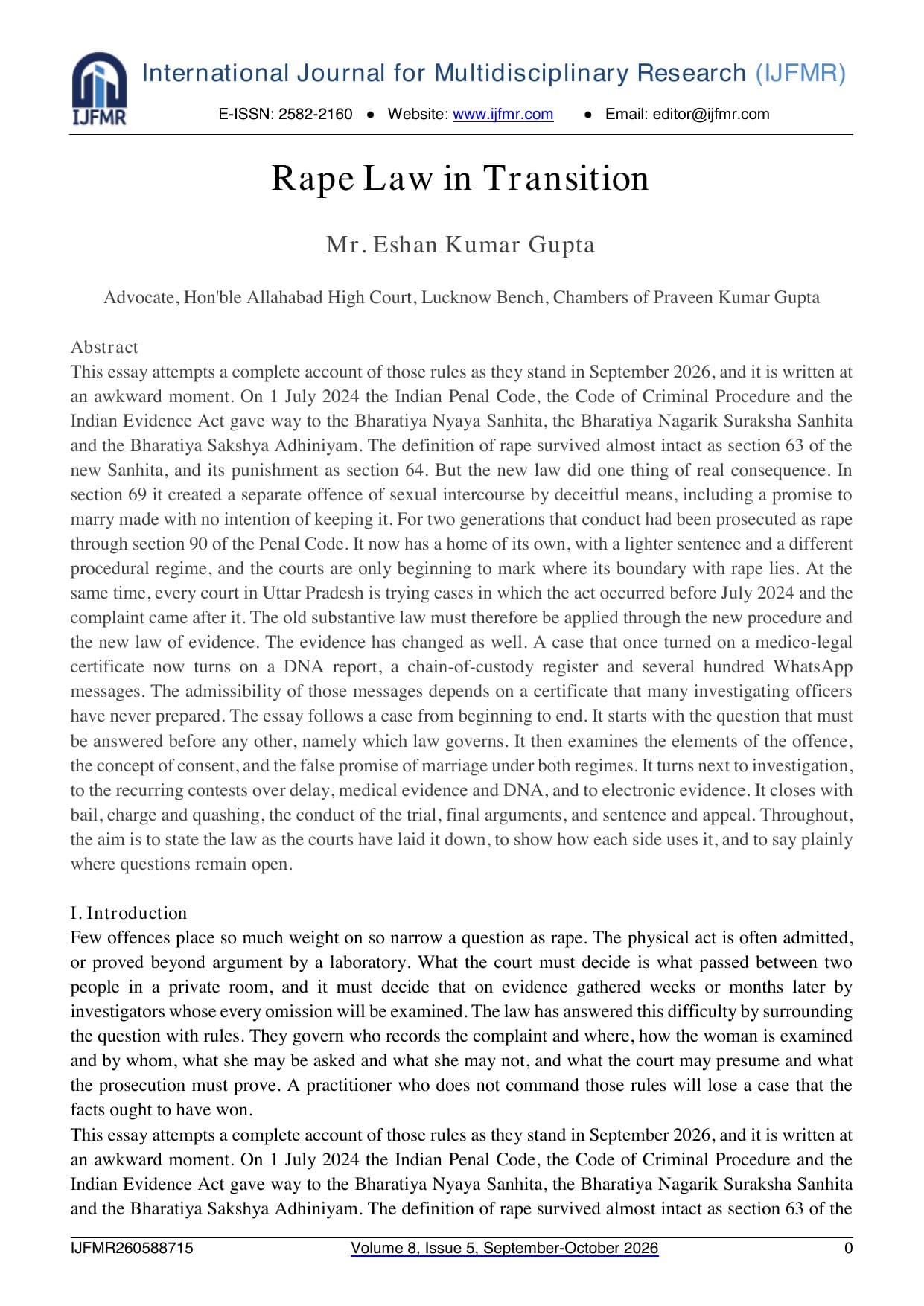
Rape Law in Transition
Section 376 of the Indian Penal Code, sections 63, 64 and 69 of the Bharatiya Nyaya Sanhita, and the trial of sexual offences from complaint to appeal.
On 1 July 2024 the Indian Penal Code, the Code of Criminal Procedure and the Indian Evidence Act gave way to the Bharatiya Nyaya Sanhita, the Bharatiya Nagarik Suraksha Sanhita and the Bharatiya Sakshya Adhiniyam. The definition of rape survived almost intact as section 63 of the new Sanhita, and its punishment as section 64. But the new law did one thing of real consequence. In section 69 it created a separate offence of sexual intercourse by deceitful means, including a promise to marry made with no intention of keeping it.
The essay follows a case from beginning to end. It starts with the question that must be answered before any other, namely which law governs. It then examines the elements of the offence, the concept of consent, and the false promise of marriage under both regimes. It turns next to investigation, to the recurring contests over delay, medical evidence and DNA, and to electronic evidence. It closes with bail, charge and quashing, the conduct of the trial, final arguments, and sentence and appeal.
- Journal
- International Journal for Multidisciplinary Research (IJFMR)
- Published in
- Vol. 8, Issue 5, September–October 2026
- Published on
- 29 September 2026
- E-ISSN
- 2582-2160
- Paper ID
- IJFMR260588715
Contents
- I.Introduction
- II.The Temporal Question: Which Law Governs
- III.The Anatomy of the Offence
- IV.Consent and Will
- V.The False Promise of Marriage: Section 376 with Section 90 IPC, and Section 69 BNS
- VI.Investigation
- VII.Delay in Lodging the First Information
- VIII.Medical Evidence
- IX.DNA Evidence
- X.Electronic Evidence: Photographs, Videos and Chats
- XI.Bail and Anticipatory Bail
- XII.Charge, Discharge and Quashing
- XIII.The Trial
- XIV.Final Arguments
- XV.Sentence, Compensation and Appeal
- XVI.Conclusion
Draft statute · 2026
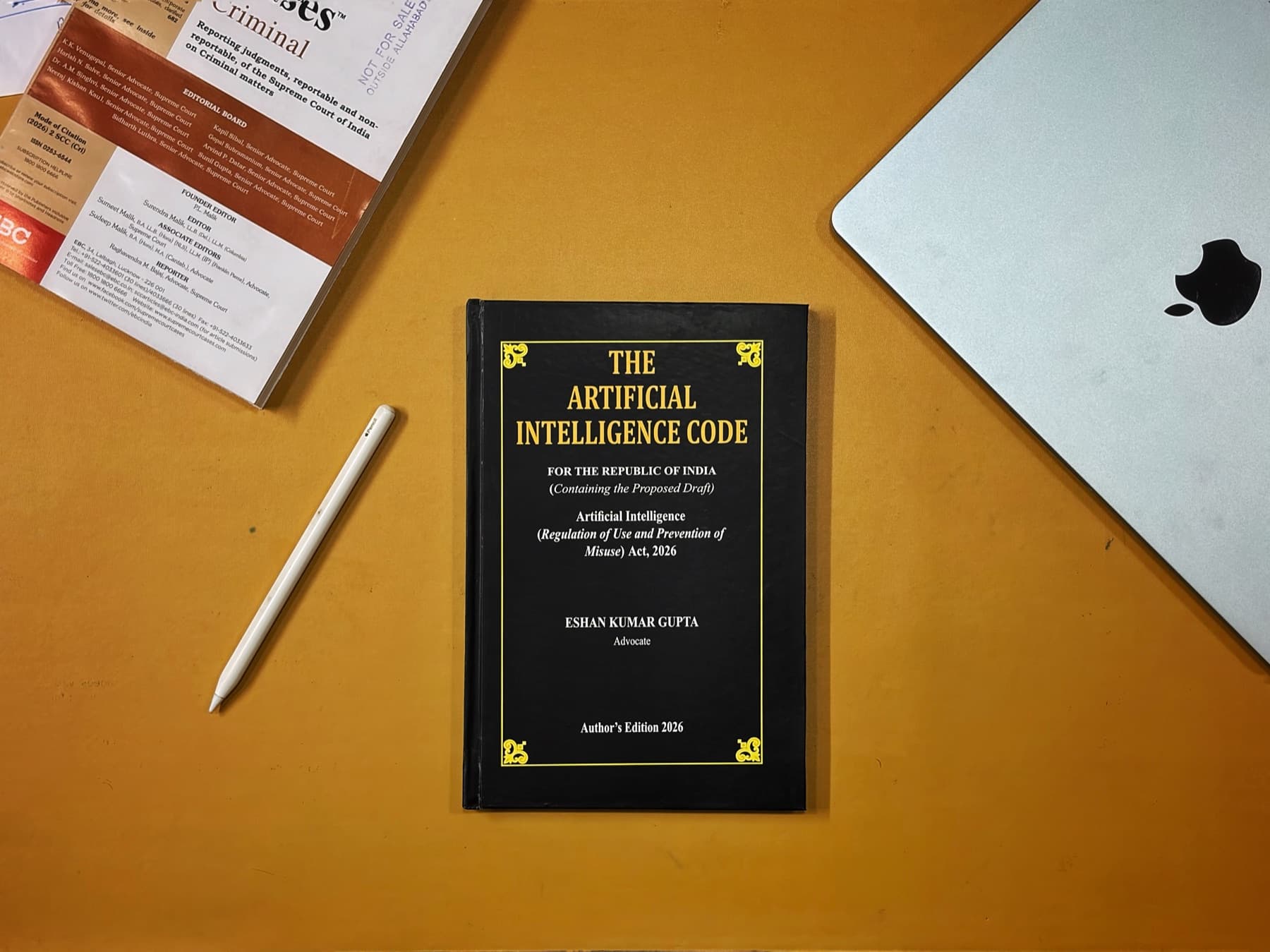
The Artificial Intelligence Code, 2026
- Author
- Eshan Kumar Gupta, Advocate
- Extent
- 60 sections · 11 chapters · 3 Schedules
- Edition
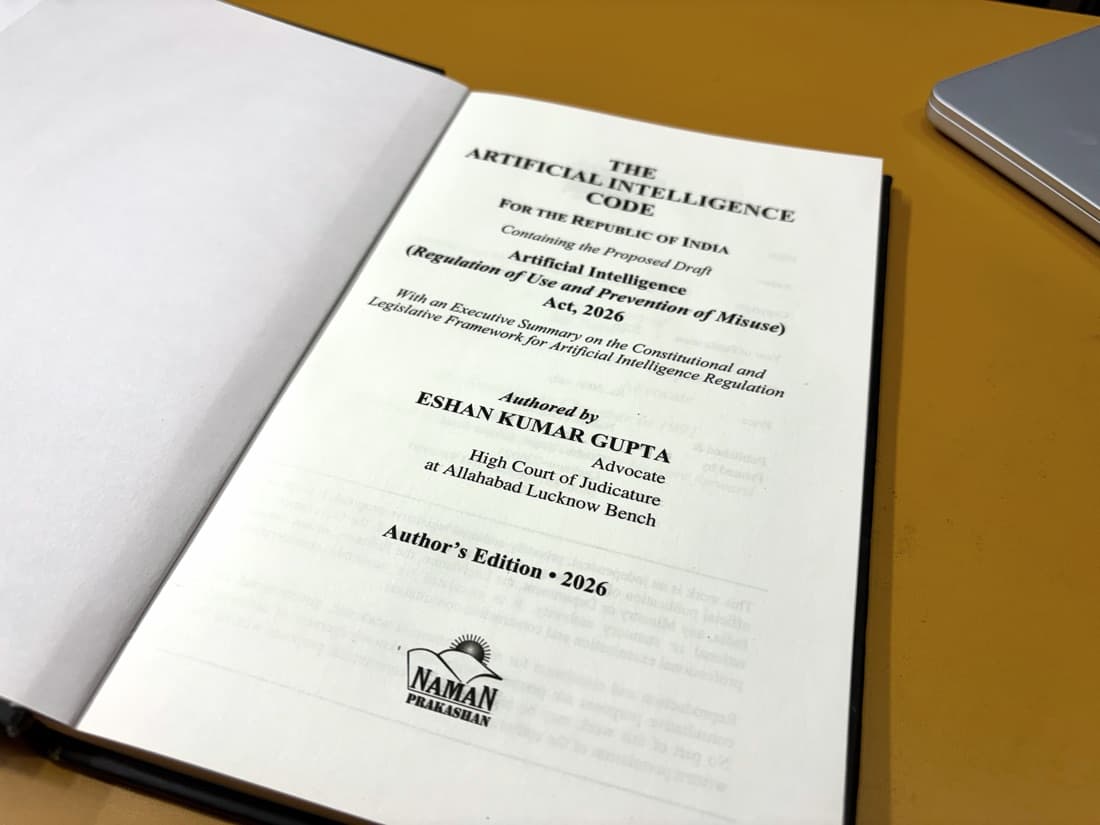
- Author’s Edition, 2026 · Naman Prakashan
India has no statute treating artificial intelligence as an independent subject of law. The Information Technology Act, 2000 recognises electronic records; the Digital Personal Data Protection Act, 2023 governs personal data; the Bharatiya Nyaya Sanhita, Nagarik Suraksha Sanhita, and Sakshya Adhiniyam, 2023 modernised criminal law, procedure, and evidence. None of them allocates liability along the chain of persons who design, train, deploy, and profit from an AI system.
The Artificial Intelligence Code, 2026 is a draft statute addressed to that gap, authored by Eshan Kumar Gupta, Advocate, Hon’ble High Court of Judicature at Allahabad, Lucknow Bench. It runs to 60 sections across 11 chapters and 3 Schedules, and rests on the Concurrent List — criminal law and procedure, contract and actionable wrongs, and evidence — with the residuary power invoked narrowly for its regulatory tier alone.
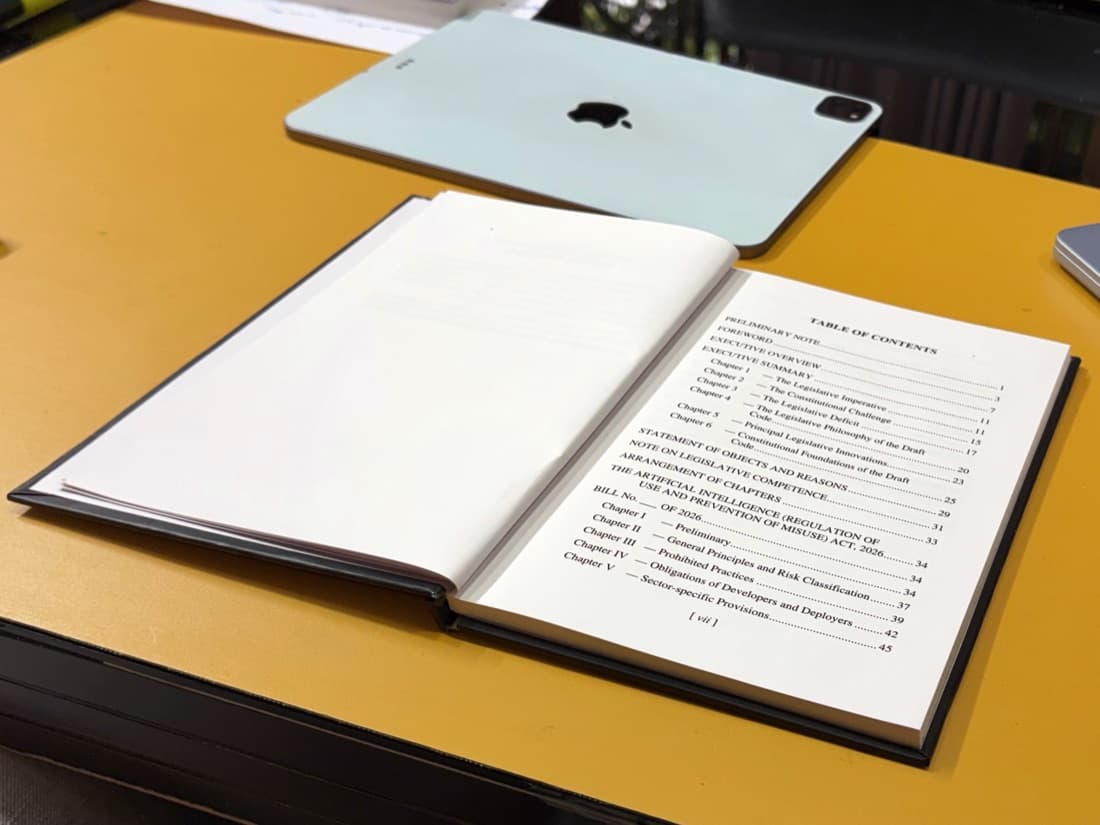
Structure
- 01Preliminary
- Extraterritorial reach by effect within India; core definitions (AI system, algorithmic decision, deployer/developer, synthetic content).
- 02General Principles
- Risk tiers (prohibited/high-risk/limited-risk/minimal-risk); human primacy over final algorithmic decisions on legal rights; disparate-impact non-discrimination.
- 03Prohibited Practices
- Absolute, non-waivable prohibitions, including subliminal manipulation, social scoring, individual predictive policing, and autonomous lethal targeting.
- 04Obligations
- Registration of high-risk systems, transparency and provenance-marking, bias audits, human oversight, incident reporting, and a right to explanation.
- 05Sector Provisions
- Elections, courts, healthcare, financial services, employment, and children — sector-specific rules within each.
- 06National AI Authority
- Composition, registration and standards functions, inquiry and suspension powers, a regulatory sandbox, and a public AI Incident Registry.
- 07Offences
- Synthetic impersonation, non-consensual intimate synthetic imagery, synthetic CSAM, AI-enabled fraud, and corporate and abetment liability.
- 08Civil Liability
- Strict deployer liability for high-risk systems, product-liability developer liability, a rebuttable presumption of causation, and compulsory insurance.
- 09Adjudication
- Adjudicating officers separated from the Authority's investigative wing, civil penalties, an AI Appellate Tribunal, and preserved writ jurisdiction.
- 10Evidence
- A new provision for the Bharatiya Sakshya Adhiniyam mandating disclosure and certification of AI-processed material, and notified Examiners of AI Evidence.
- 11Miscellaneous
- Research exemption, a reviewable national-security carve-out, good-faith protection, and a mandatory tripartite review every three years.
Status
This is an independent legislative proposal, unaffiliated with any Government, Ministry, or constitutional authority. It has been offered for academic and professional consultation, and comments are invited for incorporation into future editions. For inquiries, the Chamber may be reached via the contact page.